Workshops based on modules in Oslo

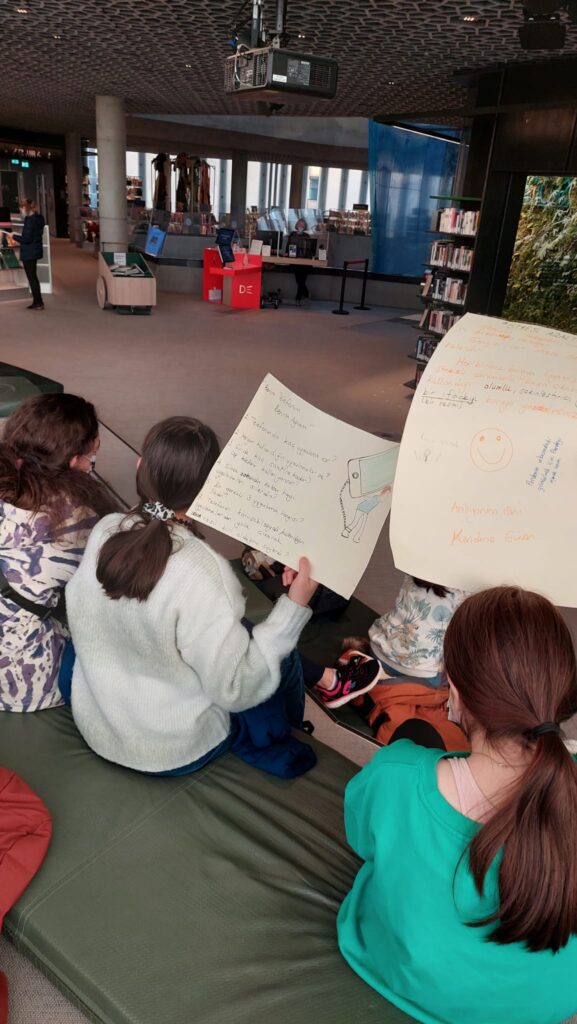
Our results also enter the implementation phase in Norway. Workshops with educators were held at Oslo Metropolitan University, attended by over 15 educators. Our trainers presented the concept of non-formal education, methodology and modules that were developed during the project. The educators had the opportunity to ask questions and tried to complete some parts of the modules on their own. We got nice feedback from many of them. They are also motivated to have pilot lessons in their respective environments. At the end, the city game was also discussed, and the participants will take an active part in recruiting children and young people from their own institutions to participate in the game during the upcoming autumn holidays.

MINDFULNESS IN TIMES OF PANDEMIC

***

Estimated duration: 60 min. without dissemination

Aims of this module: to learn what is mindfulness and how to daily practice it; to reflect on own life choices and identity; to find peace and purpose even in the midst of chaos; to be still; to come up with helpful and enriching solutions in life; to re-connect with nature; to boost creativity and group work

I ENERGIZER

„S.T.O.P”

Duration: 15 min.

Group size: around 20 – 28  people

Materials: big room or fresh air,  Infographic1 for debriefing

The Facilitator  explains that this activity will allow participants to S.T.O.P  and invites them to start moving freely, in their own tempo in the room or outside area. After few minutes they ask them to pause and:

  • STAND and breathe. Feel connected to the ground.
  • TRUST in your body. Look down. Scan your body and note any physical sensations or emotions. Release any unpleasant sensations, notice the positive ones as you exhale and inhale.
  • OBSERVE your surroundings. Raise your eyes up and see what feels good. Be thankful for this beauty and people around you.
  • PERSPECTIVE anchoring – ask yourself what new appears for you and what is your next step.

Next, the facilitator asks the group to share with them some reflections, answering following questions:

  • How did you feel in the exercise?
  • What did you notice (in your body, mind, surrounding) while you were in it?
  • How/why S.T.O.P can be  helpful as a daily practice?

As a summary, the facilitator can share with participants information about the Minfulness from Infographic 1.

Hints for The Facilitator:

  • Make sure you have big space, either indoors or outdoor. It will be much more appreciated if you have a possibility to do it outside.
  • Don’t rush the process. Mindfulness is all about seizing the moment.
  • This activity can be done individually, also in the condition of online training/workshop.

II MAIN ACTIVITY

„Where am I?”

Duration: around 30 min.

Group size: around 30 people

Materials: Infographic 2 printed out for each participant, pens, speakers to play calming and relaxing music, spacious room or outdoors, something to seat on.

The Facilitator explains that the next exercise will be fully dedicated to individual self-reflection, saying:

„In order to know where to go, it’s worth checking where you’re starting – what you already have, what can support you, and what you lack. Very helpful might be answering  questions from the „Where am I?” form.  Answer them by examining yourself carefully…”

Next the facilitator distributes the handouts and gives participants around 20 minutes to fill it up.

They can remind people to keep the silence during the whole process and encourage them to find a comfortable seat, listen to their favorite music (on the earphones), tune inward as much as possible and be honest.

At the end of the exercise, the facilitator can ask following questions:

  • Which question turned out to be the most important? Is it from the past, the present or the future? Why?
  • Have you seen more clearly where you are and where you want to go?
  • After completing this form, do you feel the same as before, or slightly different?

To close up the facilitator tells the group to keep this questionnaire and come back to it from time to time and observe how the answers to the same questions change and how you change yourself.

Hints for The Facilitator:

  • Remember to provide a cosy, silent place for people to feel safe and comfortable.
  • Remind participants that they should work in silence and fully dedicate this time to themselves.
  • This activity can be done individually, in the condition of online training/workshop.

III EVALUATION

„Mindful pandemic”

Duration: 15 min.

Group size: Any

Materials: flip chart, markers, colorful paper, devices with Internet access

After all the activities The Facilitator asks participants how mindful acts can help surviving crisis or difficult times, which we have all experienced (and are experiencing) during recent pandemic. Small discussion is very welcome to occur. As a summary to it and all the activities, participants are asked to come up with the ideas on „How to be  more mindful in the pandemic times”. The ideas – presented as a brain storm – are written down by the facilitator on the flip chart.

At the end the facilitator asks everybody in the group to choose one person and give them a strong and sincere hug, which would last three deep, shared breaths. People don’t need to breathe at one pace, but still it  will calm them down and bring a sense of security.

Hints for The Facilitator:

IV DISSEMINATION

Activity „Terapeutic nature”

Duration: at least 30 min.

Group size: Any/Individually

Materials: none

The Facilitator encourages participants to do this walking activity – meditation whenever they have time and are outdoors, in the open air –  perfect if it’s forest or field, but it will work out even in the  small backyard or garden. The pace of walk should be very slow but rhythmic, definitely slower than a traditional one. It’s important to get into your rhythm. Breathing should be deep and as long as possible, longer than natural one. While you walk, see and notice the smallest details, feel the smell of the air, count how many birds fly in the air, pay attention to the shape of branches, clouds, count the number of flowers. If you find that your thoughts are drifting towards what happened at work, at home, what happened yesterday, or what you expect tomorrow, let those thoughts go away and return to your focus on being here and now.

Congratulation! You just became mindful 🙂

TECHNOLOGY – YOUR FR…ENEMY?

*

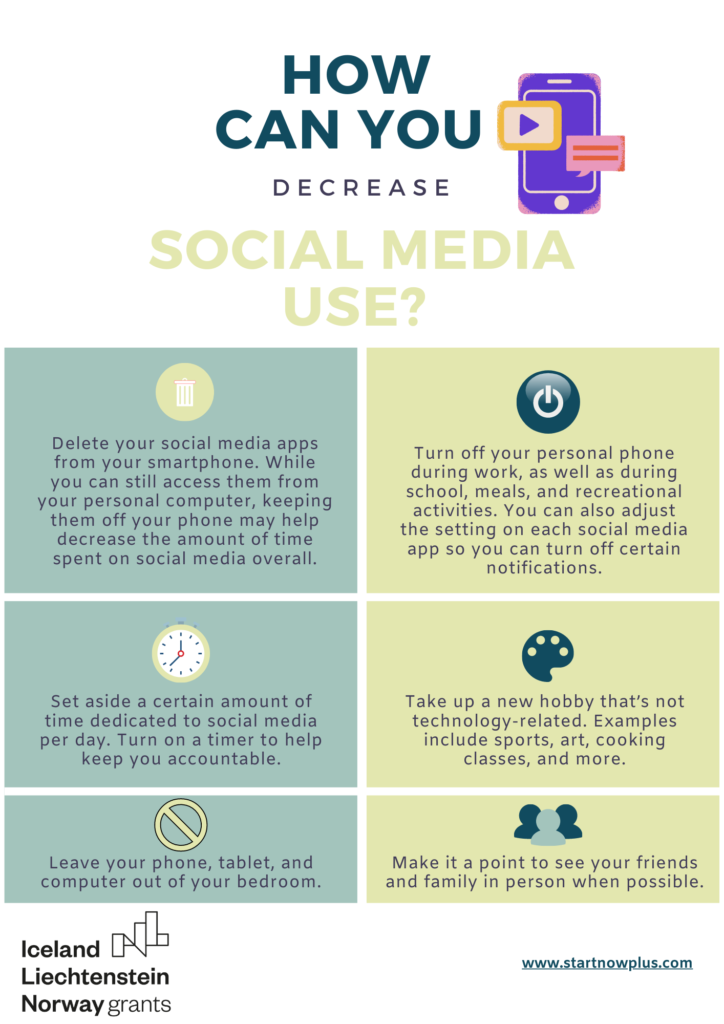
Aims of this module: to learn  about positive and negative sides of technology; to interpret social fenomenons connected to technology and social media; to boost creativity and group work; to reflect on one’s social media and technology habits; to embrace possibilities of spending time apart from technology; to share ideas and reflections on modern world

I ENERGIZER

„+/-„

Duration: 10 min.

Group size: any

Materials: at least 1 big dice  (you can print it and fold it from here: https://team-cartwright.com/wp-content/uploads/2020/01/printable-dice.pdf ), on which you stick or draw 3 + (advantages) and 3 – (disadvantages), paper, pens.

The Facilitator  explains that this activity will allow participants to reflect on bright and dark sides of using technology and will introduce them into the topic of workshops. In case of a bigger group the facilitator divides participants into smaller ones (max. 10 people, min. 5). Each team gets one big dice (it can be printed out and folded, or when using a different one,  you can stick paper on its sides with signs + and -). The participants sit on the floor in small circle and one by one throw the dice. Depending what they throw, they say positive or negative effect of technology. One person from each group should write all the reflections down. After at least 2 rounds, the facilitator finishes the game and groups are asked to share what they wrote down.

Next, the facilitator summarizes the activity, asking  the group:

  • Was it difficult to come up with the ideas?
  • Which aspects – positive or negative was more? How do you think why?
  • Do you consider technology helpful or harmful?

Hints for The Facilitator:

II MAIN ACTIVITY

„An art critic – Society observer”

Duration: around 40 min.

Group size: around 30 people

Materials: Chosen and printed out pictures from: https://www.boredpanda.com/satirical-illustrations-addiction-technology/ – we recommend pictures: 1,2,4,7,8,12,13,16,26,28,38, 45; Appendix 1 (for each group), pens, colorful crayons

The Facilitator divides the group into smaller teams of max. 4 people. Each team gets 1 picture and a form to answer questions (appendinx 1). Their task is to reflect on a problem portrayed there and discuss it within the group. As a result they should complete the given form.

After the groups are ready (in about 30 min.), the facilitator asks them to share their work.

To close the activity, the facilitator can ask follow-up questions:

  • What do you think about these pictures?
  • What do they say about society’s problems?
  • Do you think they are accurate (the pictures)?
  • What problem, which appeared in the photos, in your opinion, is the most important?
  • What problem do people in your age face the most?
  • How can we minimize it? What you can do about it?

Hints for The Facilitator:

  • Remember to print the pictures in colour.
  • Remind participants that they should work as a team and include all the members input.
  • This activity can be done in the condition of online training/workshop.

III EVALUATION

„What’s on my phone?”

Duration: 10 min.

Group size: Any

Materials: Appendix 2 printed out for every participant, private smartphone or tablet of every participant

After all the activities The Facilitator invites participants to have a moment of reflection upon filling up the form „My phone – my mirror?” (Appendix 2). To complete the task they need to take a look at their smart/tablets.

At the end, volunteers can share their answers with the rest of the group.

IV DISSEMINATION

Activity „Give technology a break”

Duration: around 60 min.

Group size: around 10-30 people

Materials: big paper, pens, crayons, paints and brushes,  markers, magazines, scissors, glue

The Facilitator asks participants to create small groups (of 5 people) and form a creative list of ways how to spend a day NOT USING ANY TECHNOLOGY. The point is that the list should be very innovative and showing „out of the box” thinking. Additionally to each idea participants should create a picture, portraying that advice. They can draw, paint or create collages. At the end of their work the facilitator asks them to present their work, which can be later displayed in the classroom.

Meeting with the educators – training course in Poland!

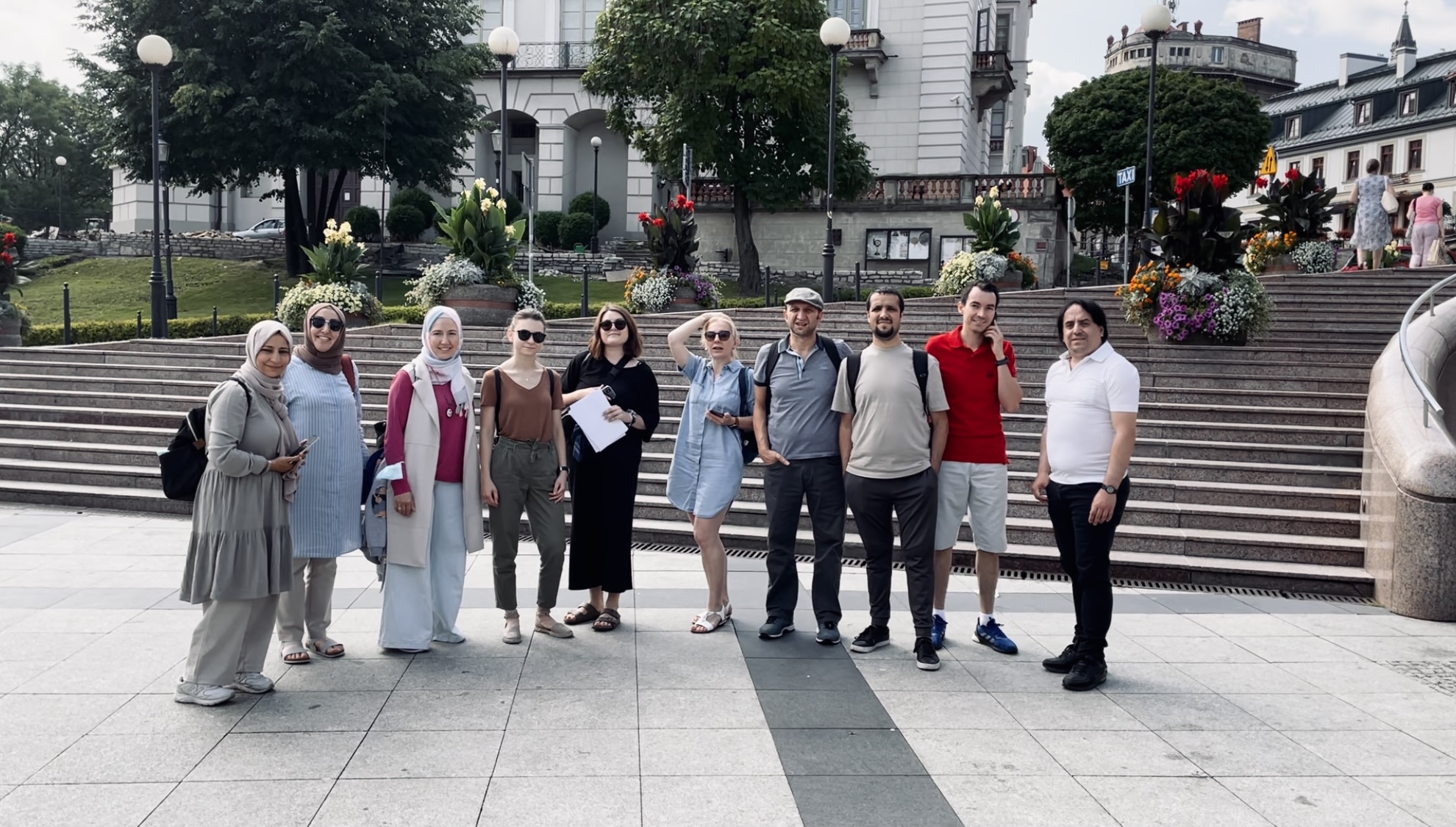
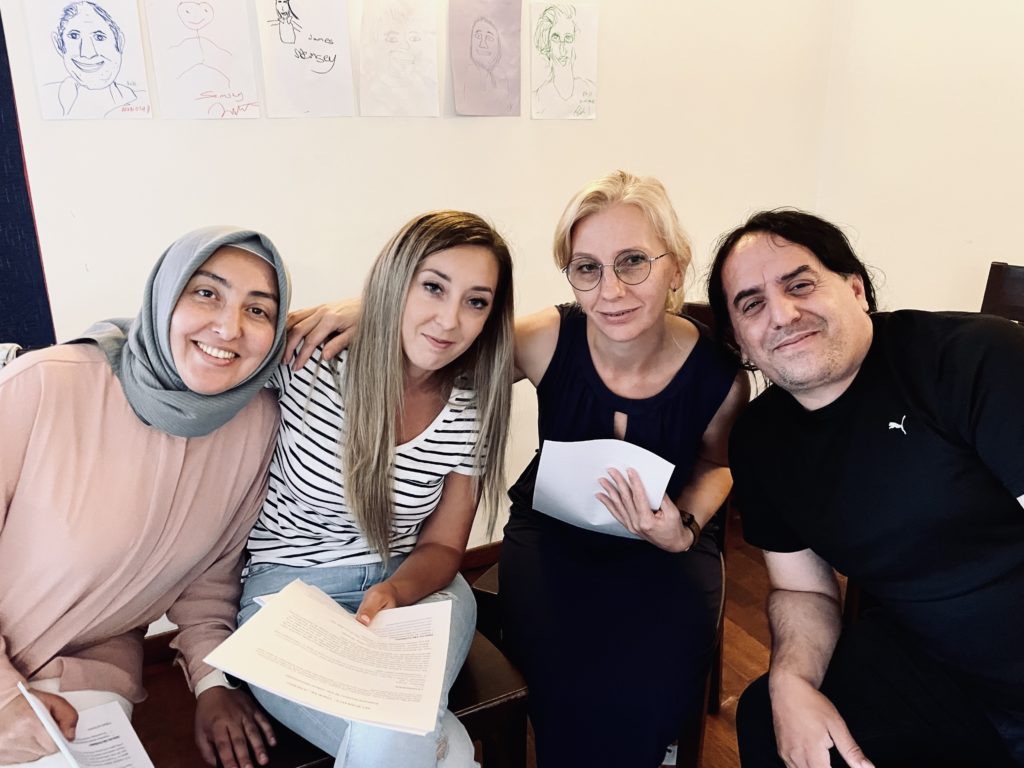
In the second week of August, as part of the Startnow + project, we hosted training course for teachers and educators from Poland and Norway, which took place in Milówka, Poland. 

The meeting consisted of workshop sessions devoted to non-formal education, health education and the practical application of educational modules created under the StartNow + project.

In addition, participants willingly shared information about the Norwegian and Polish education system, talked about the well-being of students and teachers, and had the opportunity to play the role of facilitators and conduct classes of their choice based on the module tool and receive feedback.

The group also took part in a city game in Bielsko-Biała and a Polish-Norwegian evening, thanks to which we learned a lot of interesting facts about our countries.

We hope that the training was a good opportunity for the participants to exchange good practices, network and learn about the methods that will soon be used by them in classes with children and youth.

STRESS LESS II

in this module:

  • We will give a general information about stress, its causes, emotions and feelings that provoke stress,
  • You will learn about the harm of stress to the human body;
  • You will also identify the types of situations that could be the most stressful how to respond to these situations;
  • You will practice effective ways to overcome stressful situations: breathing, muscle control, visualization, verbal techniques;
  • Finally, you will be able to adapt the techniques of socially acceptable expression of negative emotions.

To get this flashcard in PDF just click the button below …